
Search Michigan Criminal History
Michigan criminal history records are held at the state, county, and local level. The Michigan State Police run the central criminal history database through ICHAT, while circuit courts and district courts in all 83 counties keep their own case files. You can look up criminal records online through MiCOURT, request a formal background check through ICHAT, or visit a county clerk's office in person. This page covers how to find and access criminal history records across the state of Michigan, from statewide search tools to county court systems and local police records.
Michigan Criminal History Overview
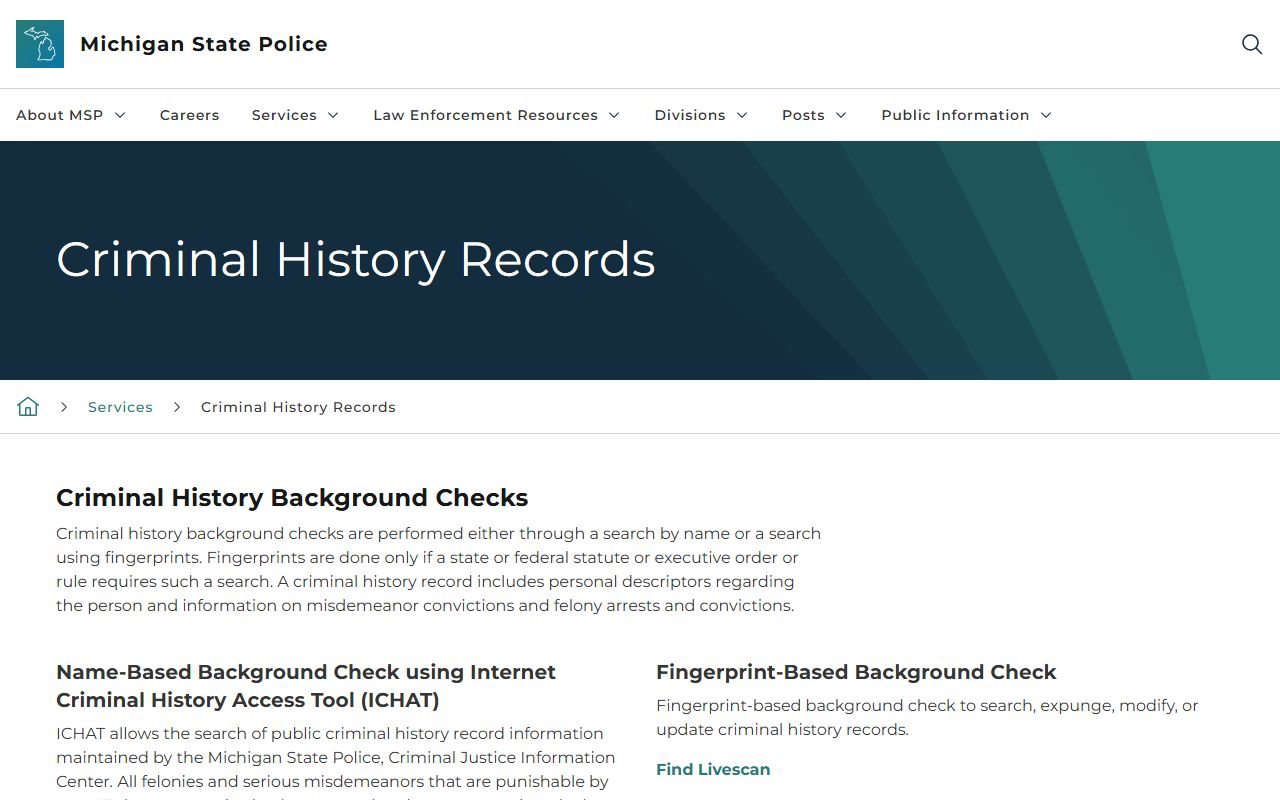
Michigan Criminal History Through ICHAT
The Internet Criminal History Access Tool is the main way to check someone's criminal history in Michigan. ICHAT is run by the Michigan State Police Criminal Justice Information Center. It covers all 83 counties in the state. You pay $10 per search, plus a $2.50 credit card fee. Results come back right away.
ICHAT pulls data from law enforcement, prosecutors, and courts across Michigan. The system shows felony convictions and serious misdemeanor convictions where the sentence could be more than 93 days. It also shows pending felony and serious misdemeanor charges, case dispositions, and sentencing details. You need a full name and date of birth to run a search. Go to the ICHAT portal to set up an account and start a search. Call (517) 322-5546 if you need help getting set up.
There are limits to what ICHAT shows. It does not include suppressed or expunged records, warrant info, federal records, tribal records, traffic violations, juvenile records, or local misdemeanors under 93 days. It also won't show criminal history from other states. For a more complete picture, you may need to check court records directly or request a fingerprint-based check from the Michigan State Police.
Fee waivers are an option for some people. Under MCL § 15.234, the first $20 can be waived for individuals who qualify as indigent. You need to fill out a DIR-103 Affidavit of Indigency form. This applies to ICHAT and some FOIA requests as well.
Note: ICHAT is a name-based search and does not verify identity through fingerprints. Results may include records for people with the same name.
Michigan Criminal History on MiCOURT
MiCOURT is the free statewide court case search system. It covers 57 circuit courts and many district courts across Michigan. You can search by name, case number, court, filing date, or case type. No account is needed for basic searches.
For criminal history, MiCOURT shows case numbers, filing dates, party names, charge info, case status, scheduled hearings, and disposition details. You can look up both open and closed cases. Some courts only show criminal convictions within the past seven years. The system does not show document images for most cases. If you need to see the actual filing, you'll have to contact the county clerk's office. Still, MiCOURT is one of the best free tools for checking Michigan criminal records from home.
Each county's circuit court has its own MiCOURT page. You can search a specific court or search statewide. District courts are also on the system, though not all of them participate yet. The search works well for finding basic case info fast. For copies of filings, orders, or judgments, reach out to the clerk of the court where the case was filed.
Other Michigan Criminal History Search Tools
Michigan has more than just ICHAT and MiCOURT for criminal record lookups. The state runs several free databases that can help fill in the picture.
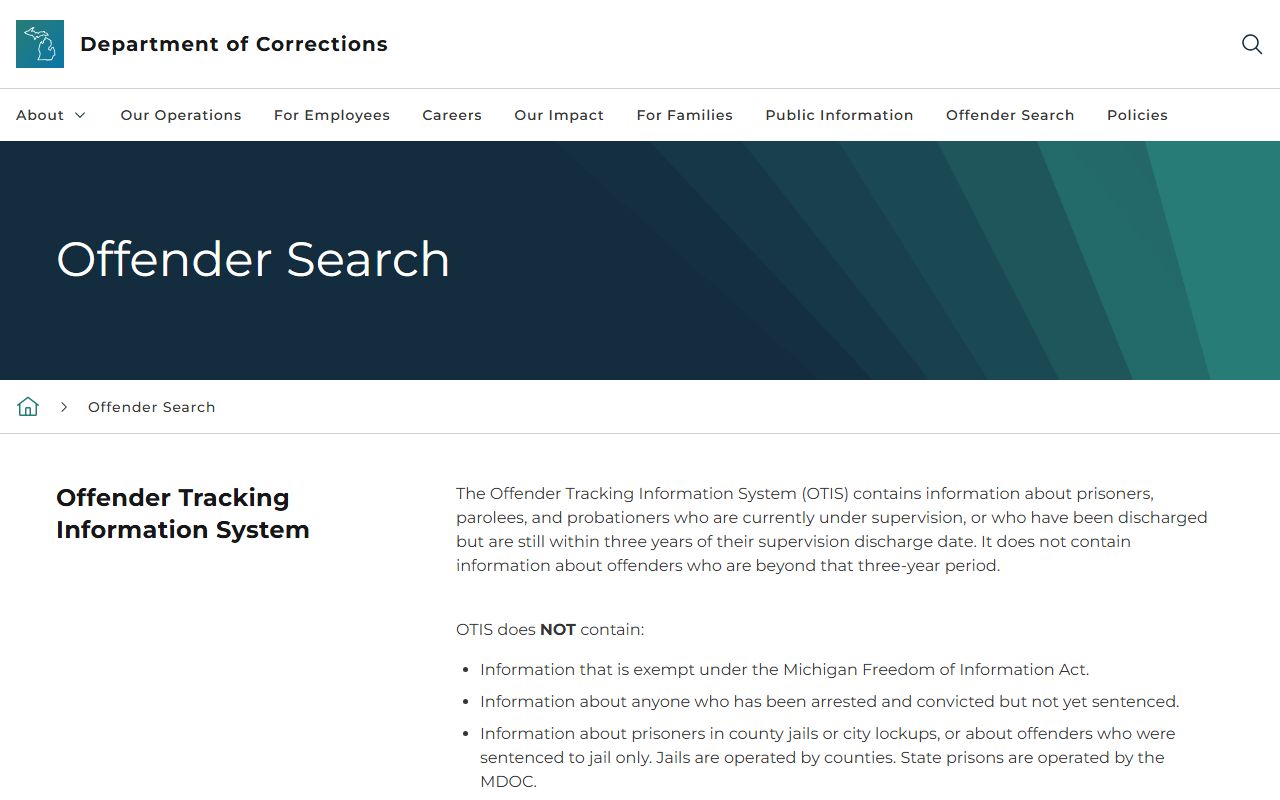
The Michigan Offender Tracking Information System, known as OTIS, is a free tool run by the Department of Corrections. It tracks current and recent state prisoners, parolees, and probationers. You can search by name or offender number. OTIS shows where a person is housed, their offense, sentence length, earliest release date, and parole status. It includes photos. The catch is that OTIS only covers people under state supervision. It does not include county jail inmates or people who served short sentences locally. Only felons sent to state prison show up, plus those discharged within the last three years.
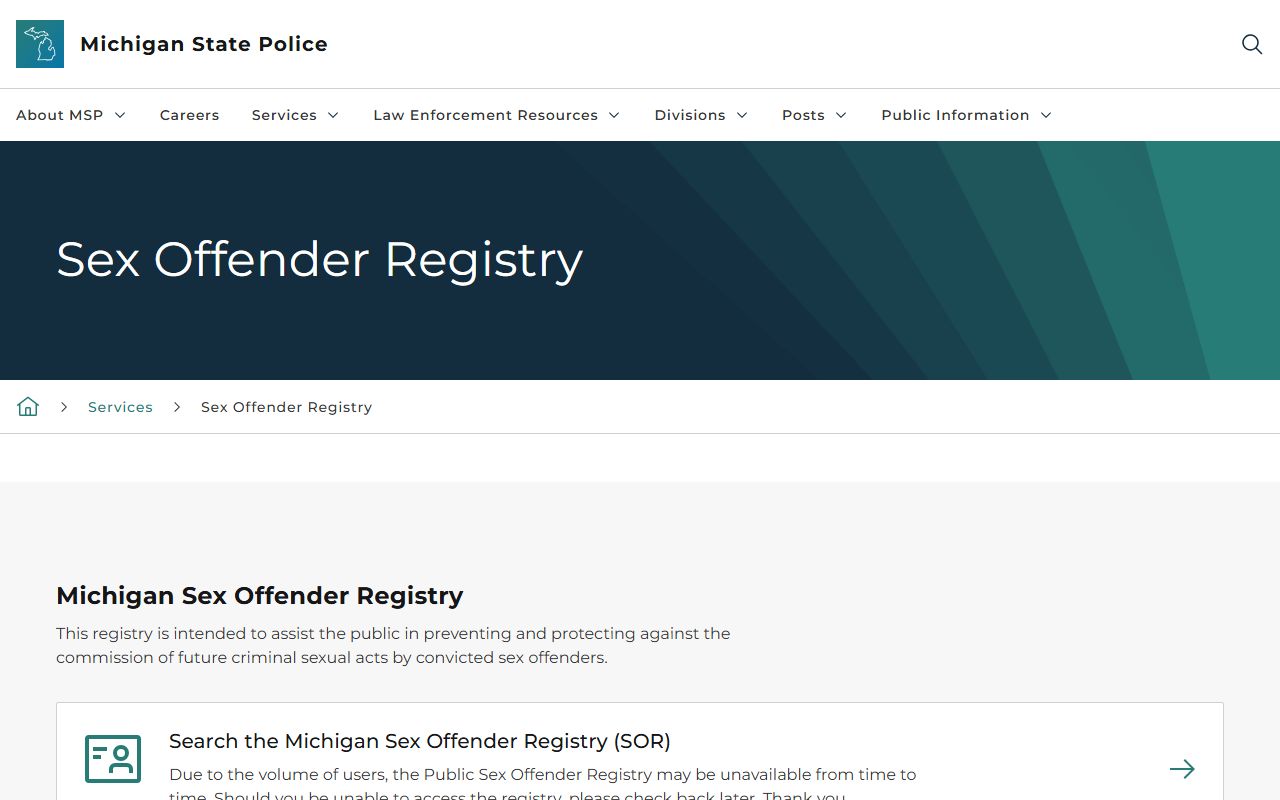
The Michigan Public Sex Offender Registry is another free resource. The Michigan State Police maintain it. You can search by name, location, or zip code. The registry shows photos, addresses, offense details, tier level, and compliance status for registered sex offenders statewide.
The CLEMIS system serves Oakland, Wayne, Macomb, Washtenaw, and Genesee counties. It handles traffic crash reports and some police reports online. Crash reports cost between $10 and $19. CLEMIS is not a criminal history database, but it can turn up records tied to criminal incidents in those five counties.
Fingerprint-Based Criminal History Checks in Michigan
A fingerprint check is the most accurate way to pull someone's Michigan criminal history. Unlike ICHAT, it ties results to a specific person through prints, not just a name match. The Michigan State Police handle these through the Criminal Justice Information Center.
You start by getting fingerprinted at an authorized location. Many police departments and private vendors offer this. You can use a paper fingerprint card (form RI-008) or go to a LiveScan location for electronic submission. LiveScan is faster but costs more, usually $50 to $70 depending on the vendor. Paper card submissions go by mail to the Michigan State Police Cashier's Office at P.O. Box 30266, Lansing, MI 48909-7766. The fee is $30. Include a cover letter with your request. Certain jobs, licenses, and legal matters require a fingerprint-based check by law under MCL § 28.241a.
Michigan Criminal History and FOIA
The Michigan Freedom of Information Act lets the public request government records, including some criminal history information. FOIA is spelled out in MCL § 15.231 through 15.246. Any person can file a FOIA request, though people in state or local correctional facilities are excluded from this right.
A FOIA request must be in writing. You send it by email, fax, mail, or online form to the agency that holds the records. Put "FOIA" or "FOIA Request" in the subject line. Include your full name, mailing address, and a clear description of what you want. The agency has five business days to respond. They can extend that by ten more days with written notice. Fees vary by agency. Copies run $0.10 to $0.15 per page. Search and retrieval labor costs between $20 and $45 per hour. Certification costs $1 per record.
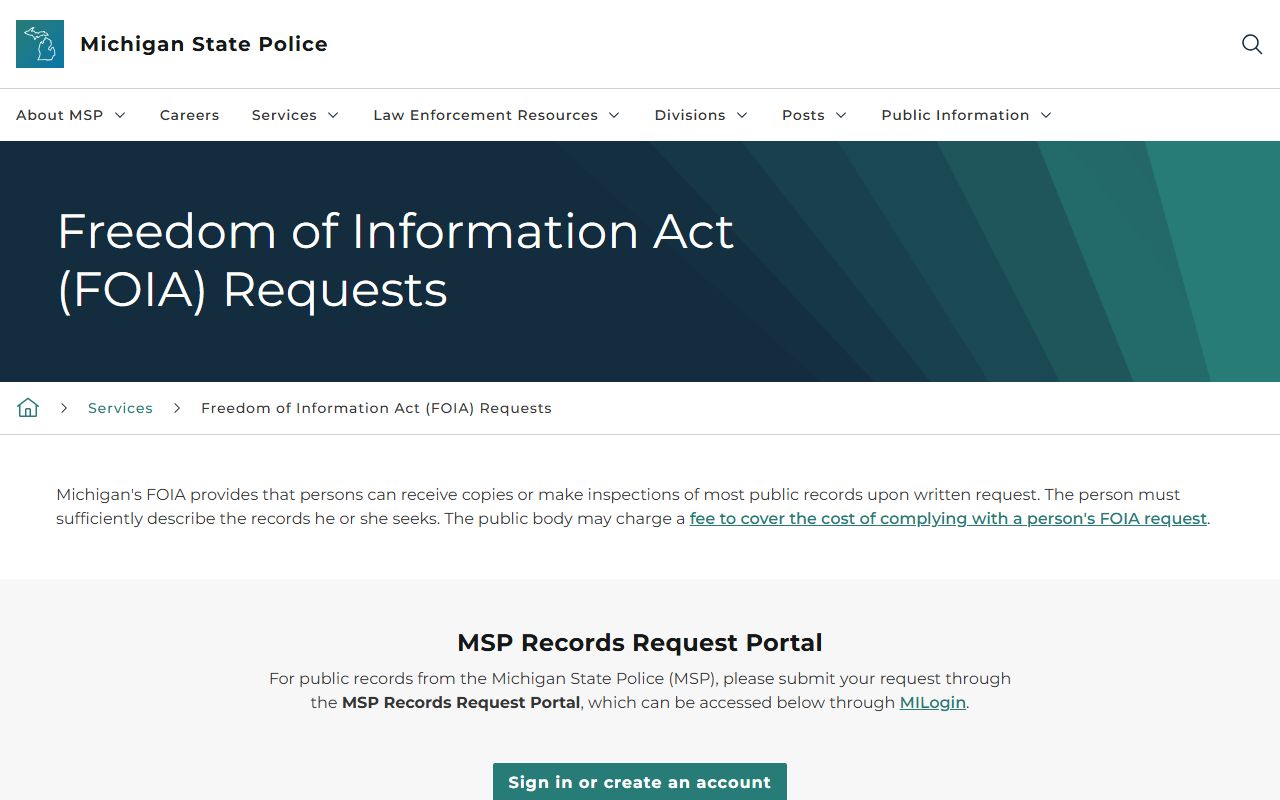
There is a big exception here. Court records are generally not subject to FOIA in Michigan. You cannot use FOIA to get case files from a circuit court or district court. Those records fall under Michigan Court Rule 8.119 instead. You request them directly from the court clerk's office. FOIA works for police records, state agency files, and other government documents, but not court case files.
Some records are exempt from FOIA entirely. Active criminal investigation files can be withheld if release would interfere with proceedings. Juvenile records are sealed under MCL § 712A.28. Records sealed by court order and expunged records also stay hidden. Personal info like Social Security numbers and medical details gets redacted.
Michigan Criminal History and Clean Slate
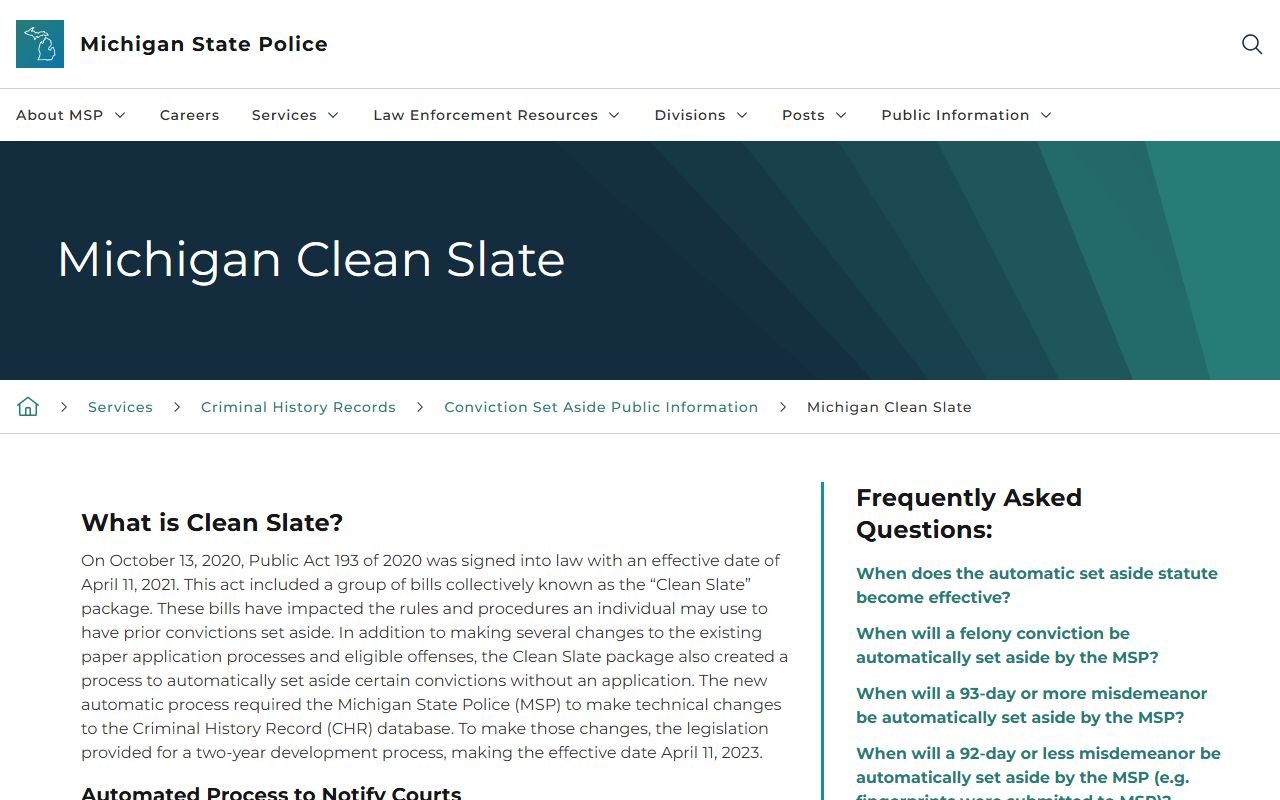
Michigan's Clean Slate law changed how criminal history records work in the state. Public Acts 361 through 366 of 2020 expanded who can get records expunged and created an automatic expungement process. Expanded petition-based expungement started April 11, 2021. Automatic expungement began April 11, 2023.
Under the automatic process, certain misdemeanors are cleared after seven years. Misdemeanors carrying up to 92 days can be expunged with no limit on number. Misdemeanors of 93 or more days get cleared too, but only up to four convictions. Felonies can be automatically expunged after ten years from sentencing or release, whichever is later. The cap is two felony convictions. This matters when you search Michigan criminal history because some records that used to show up no longer will. The Michigan State Police handle the automatic process through their Clean Slate information page.
Not everything qualifies. Assaultive crimes, serious misdemeanors, crimes of dishonesty, offenses punishable by ten or more years, crimes involving minors or vulnerable adults, human trafficking, OWI/DUI, and sex offenses are all excluded from automatic expungement. First-time OWI became eligible for petition-based expungement as of February 2022. Marijuana offenses that are now legal also qualify.
To check if a record was expunged, you can run a personal records check through the Michigan State Police with fingerprints for $30, do an ICHAT search for $10, or contact the court where the conviction happened. Under MCL § 780.621, expunged records are removed from public databases. Multiple offenses from a single incident within 24 hours can be treated as one conviction for expungement purposes.
What Michigan Criminal History Records Show
A Michigan criminal history record from the state repository includes the person's full legal name and known aliases, date of birth, physical description, mugshot if one exists, State Identification number, and FBI number when applicable. It lists felony convictions, serious misdemeanor convictions over 93 days, pending charges, dispositions, and sentencing details.
Court case records add more detail. They show the case number, filing date, charges with Michigan statute numbers, plea info, all hearing dates, whether the case is open or closed, the judge, and the full register of actions. Sentencing orders and probation conditions are part of the record too. Police records from a FOIA request may include the incident report number, date and location, reporting officer, persons involved, witness info, evidence collected, and follow-up actions taken.
Some records stay out of public reach. Juvenile records are generally sealed. Court-ordered sealed records and expunged records won't show up. Active investigation files, records that could interfere with a fair trial, medical info, Social Security numbers, and victim details are all restricted. Mental health records and child protective proceedings are not public either. Michigan keeps felony case records for 30 years after closure. Capital and life offense records are permanent. Misdemeanor records last 7 to 10 years. Felony arrest records are kept for 50 years.
Browse Michigan Criminal History by County
Each of Michigan's 83 counties has a circuit court and at least one district court that handle criminal cases. Pick a county below to find local court info and criminal history resources for that area.
Michigan Criminal History in Major Cities
Michigan's largest cities each have their own police departments and district courts. Criminal cases go through the county circuit court system. Pick a city to find local criminal history resources.